
Videos have steadily taken over written content over the last decade, in regard to the sheer impact they have had on consumers. It facilitates brand awareness, sales, and human connection.
In the beginning, they were simply easier to consume as compared to reading an article or blog post (like this one, perhaps? 😅), but difficult to create.
However, AI has changed everything.
In fact, mid-sized businesses are now producing twice as many videos compared to 2023, and AI is a big reason why.
AI has cut the time, cost, and effort of making a pro-quality video
What once took weeks and a big budget now takes just minutes. Whether you’re a creator or a business, knowing how AI video generation tools work can give you a real edge in today’s AI-driven marketing world.
The impact of Automated Video Production is real
Artificial intelligence isn’t just a sci-fi concept anymore; it’s a reality now. This quick-start guide will help you understand what automated video production is all about, why it’s becoming essential, and how you can start using AI tools to streamline your video creation process today.
So, what exactly is automated video production?
Automated video production is the process of using AI to create or edit video content with minimal human input. It’s a powerful fusion of technology and creativity that streamlines workflows and opens up new possibilities.
A. Definition of Automated Video Production and Core Concepts
In simple terms, automated video production is when AI tools make videos with almost no manual work.
Using AI tools to create videos with little to no human involvement is the essence of automated video creation. Unlike traditional editing software, these tools can generate scripts, voiceovers, animations, and even full videos from plain text.
There are two major types of automated video production:
➕ Automated Editing: Where AI helps with tasks like cutting footage, adding transitions, and applying effects.
➕ Full Video Generation: Where AI creates an entire video from scratch, often from a simple text prompt.
B. Main Technologies Used in Automated Video Production
The “magic” of automated video production comes from a smart mix of AI tools:
🎯 Advanced AI Video Creation – These are the core systems that make videos from data. They can build new scenes or blend together existing video clips and images.
🎯 Natural Language Processing (NLP) – This lets AI read and understand your text prompts, turning your written ideas into videos and visual stories.
🎯 Computer Vision – This helps AI “see” and understand what’s in a video, such as objects, scenes, or emotions, so it can add effects or highlight key moments.
🎯 AI Voiceover and Audio Generation – These tools create realistic, human-like voices from text, removing the need for costly voice actors or recording studios.
C. Different Types of Automated Video Production
The environment of AI video generation is varied, with tools made for various use cases.
🎯 Text-to-Video Creation – You type a script or even a short line, and AI produces a video with matching visuals, voiceovers, and background music. Great for quick explainers or social media posts.
🎯 Automated Video Editing – AI reviews your footage, makes highlight reels, matches clips with music, and adds smooth transitions or effects.
🎯 AI Avatar Creation – Builds realistic digital presenters or animated characters that can speak your message in different languages and styles. Tools like Vidatia offer both live-action and illustrated characters.
🎯 Blog-to-Video Conversion – Turns written articles into videos by pulling key points and adding relevant visuals.
🎯 Real-Time Video Clipping – AI scans long videos (such as webinars or podcasts) and automatically creates short, shareable clips perfect for social media.
The Top Benefits of Using AI for Automated Video Production
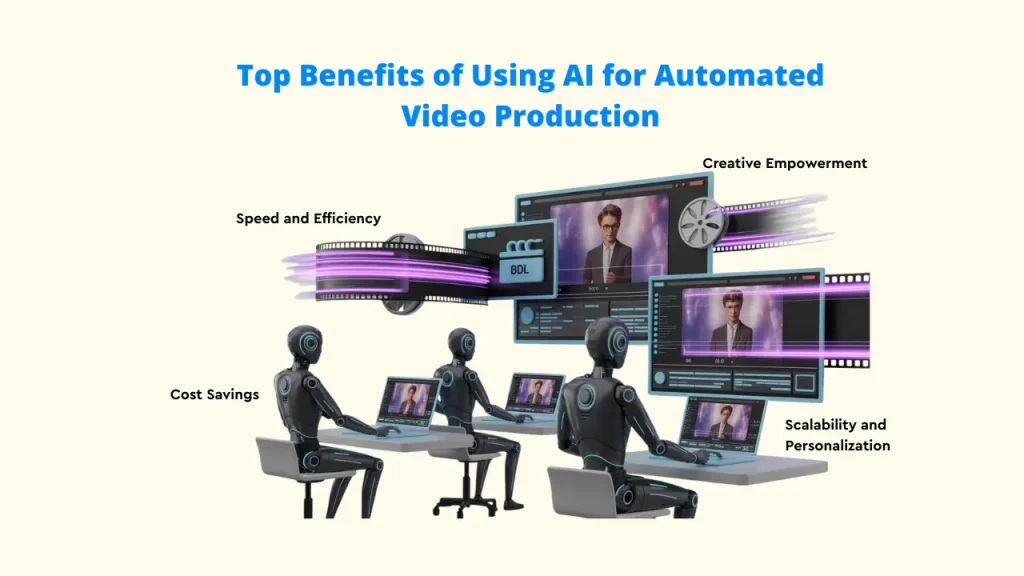
Why are so many people switching to automated video production for their content? Because the advantages are transformative.
1. Speed and Efficiency
AI simplifies work by handling time-consuming tasks such as editing, scriptwriting, and scene changes. This speed allows creators to update their content instantly, follow trends, and post more frequently.
Moreover, automated video production tools facilitate the process of video revision and A/B testing, allowing you to make real-time content improvements based on viewer feedback.
2. Scalability and Personalization
AI video generation makes it possible to create large numbers of customized videos for different audiences, platforms, or marketing campaigns, something that used to require a lot of time and money.
With dynamic AI visuals, voiceovers, and text, brands can send personalized messages to many different audience groups while keeping a strong connection with each one.
3. Creative Empowerment
By handling boring and repetitive work, AI gives creators more time to focus on storytelling and planning. It can suggest design styles, create multiple versions, and give fresh creative ideas while helping them improve, not limit, creativity.
Tools like Vidatia even offer more than a dozen unique styles and one-click video creation, making the creative process even easier. The age of ‘If you can imagine it, you can create it’ has truly arrived!
4. Cost Savings
Automated video production cuts out the need for costly equipment, studio space, and large production teams. Now, high-quality videos can be made with budget-friendly or even free tools (with some limitations). This makes it possible for small businesses and solo creators to compete with bigger brands that have large budgets.
How to Get Started with Automated Video Production: A Simple Guide
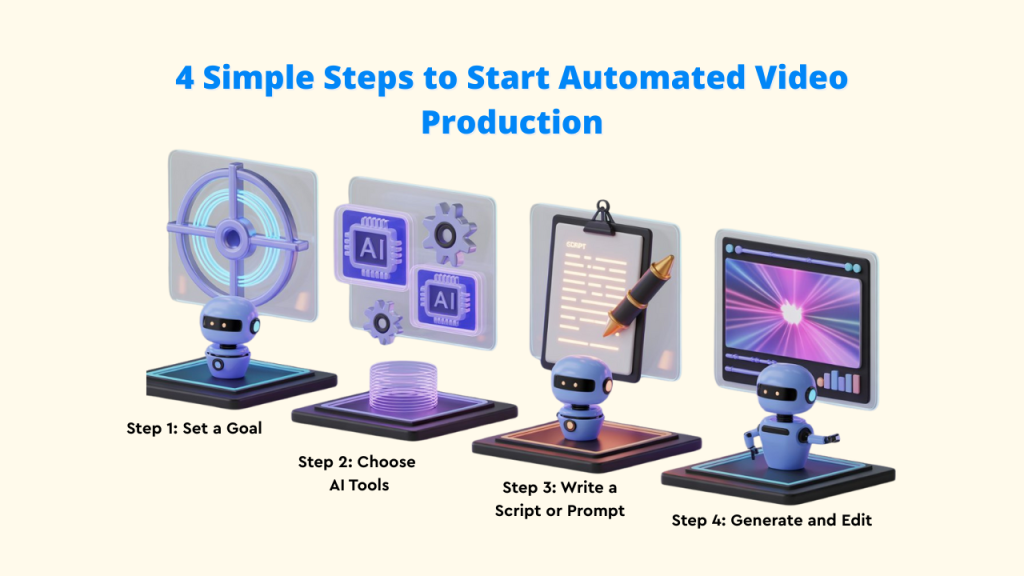
Step 1: Set a Clear Goal for Automated Video Production
Before starting with automated video production, decide exactly what you want to achieve.
Decide on your video type:
- Explainer video?
- Instagram Reel?
- YouTube Short?
- Facebook videos?
- Product ad?
- TikToks to increase brand recognition
Your goal will guide the style, length, format, and where you share your videos. Different purposes need different methods, so knowing your target outcome will help you pick the right AI tools and strategies for the best results.
Step 2: Select the Best AI Tools for Automated Video Production
1. VIDATIA
An all-inclusive automated video production platform that blends sophisticated editing features with text-to-video production. VIDATIA is a master at producing marketing videos with expertly designed templates and adaptable branding options.
Price: $47 per month
Ideal for: Content creators and marketers who want to quickly create highlight videos without editing everything by hand.
2. Elai.io
Elai.io is great for making AI video generation with realistic human avatars. For internal communications, corporate training videos, and instructional materials where a human presenter has a significant influence, it’s the ideal automated video production tool.
Price: Plans begin at $100 per month
Ideal for: Corporate training, team messages, and content for global audiences with different languages.
3. Synthesia
A suitable platform that allows for multilingual support and personalized avatars for AI-generated presenter videos. Tools like Synthesia are perfect for internal communications and professional presentations because they excel in corporate use cases.
Price: Starts at $52.32 per month (Personal Plan); team pricing is available
Ideal for: Business presentations, e-learning courses, and marketing videos with a human face.
4. Pika Art AI Video Generator
At the forefront of innovation in cinematic and motion-rich content, Pika Art AI Video Generator provides state-of-the-art AI video generation capabilities for creative professionals in need of artistic, high-quality video content.
Price: From $59 per month
Ideal for: Creators, video editors, filmmakers, and agencies who want more creative control.
5. Pictory
Focuses on transforming long-form content into engaging short videos with Pictory. Excellent for repurposing webinars, podcasts, and blog posts into social media content with automated video production.
Price: Starts at $49 per month for consistent character videos
Ideal for: Bloggers, digital marketers, and YouTubers who want to turn written content into video.
6. Lumen5
User-friendly platform designed for marketing teams and social media managers. Offers templates optimized for various social platforms and automated scene creation from text input.
Price: Paid plans start at $59 per month (for simple, unbranded videos).
Ideal for: Social media managers, small business owners, and anyone making videos for Instagram, LinkedIn, and more.
7. Canva AI Video Editor
This tool adds AI video generation features to Canva’s well-known design platform. If you’re already using Canva for designs, it’s a smooth way to start creating videos too.
Price: Canva Pro starts at $15 per month.
Ideal For: Beginners, solo creators, and teams that need fast, branded videos.
Step 3: Craft Your Prompt or Script
The success of your automated video production depends a lot on how clearly you give instructions. A good prompt should explain the tone, style, audience, main message, and the type of visuals you want.
For text-to-video tools, don’t just say what you want to say; also explain how you want it to look. Mention things like speed, mood, colors, and any visuals that match your brand’s look and feel.
If you’re writing a script for an AI avatar, keep the language simple and natural, like a real conversation. To assist the AI in speaking with the proper tone and flow, include emphasis and pauses.
Step 4: Generate, Edit, and Refine
Automated video production tools have made it possible to create full videos in less than 15 minutes. This saves a lot of time and helps creators work faster. But remember, the first version that the AI gives you is just the starting point of the creative process.
Review your video after it’s generated to ensure visuals, audio, and messaging align. Use built-in editing tools to fine-tune timing, visuals, and overall quality.
Don’t hesitate to generate multiple versions and test different approaches. AI tools make iteration cost-effective, so experiment with different styles, lengths, and formats to find what resonates best with your audience.
What Does the Future Hold for Automated Video Production?
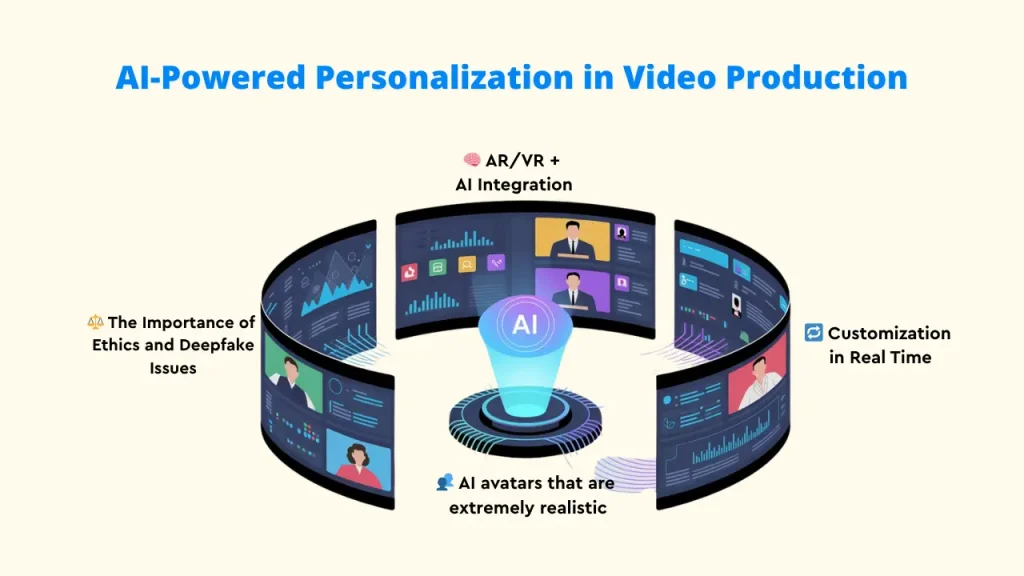
The world of AI video generation is only just beginning. Here’s a look at what the future may bring as automated video production continues to grow:
👥 AI avatars that are extremely realistic
Imagine watching a video and not being able to tell if the person on screen is real or created by AI. That’s the direction automated video production is heading.
Avatars attract attention by displaying actual emotions, facial expressions, and even cultural habits. These avatars are already being used in customer support, virtual influencers, and more, blurring the line between human and digital presenters.
🔁 Customization in Real Time
Imagine hitting play on a video that instantly adapts to your identity, location, or preferences. This kind of real-time personalization is now possible with AI. Automated video production can now adjust the language, style, and message of videos using viewer data.
Tools like Vidatia offer advanced script creation with AI, plus options to tweak visuals and sound to match the viewer’s needs.
🧠 AR/VR + AI Integration
Automated video production is no longer limited to flat, 2D content. AI is now being used to create full 3D experiences through augmented and virtual reality. This means businesses can offer virtual product demos, realistic training environments, or interactive storytelling using AI-generated scenes and objects.
⚖️ The Importance of Ethics and Deepfake Issues
As AI video generation becomes more realistic, there are growing concerns about how it’s used. It’s important to stay honest and clear when using deepfake-style tech. The future of automated video production must include strong ethics like proper labeling, asking for permission, and making sure digital content can be trusted.
Conclusion
AI is already transforming how videos are edited, simplifying workflows, and making high-quality production possible for everyone. Whether you’re a solo creator or a growing business, AI helps you create more content, cut costs, and grow faster.
The smartest approach? Learn the ropes, start small, and grow with assurance.
Begin with a user-friendly tool like VIDATIA, which excels in real-time video clipping and AI-powered content automation. It’s a perfect launchpad for exploring the world of automated video.
Your opportunities will change as automated video production tools continue to advance. Industry estimates indicate that by 2030, demand for AI-generated video content will increase by 40–60%, indicating not just a trend but a long-term shift in the way that we use video to tell stories.
In the end, automated tools are meant to supplement human creativity, not to replace it. The future of video belongs to those who combine AI efficiency with authentic storytelling, strategic thinking, and a bold creative vision.
Now is the time to experiment, adapt, and lead.
FAQs about Automated Video Production
Que: Will AI take over the work of human video editors and creators?
A: Not at all. AI is great at handling repetitive and time-consuming tasks, but it can’t replace the creativity, storytelling, and originality that humans bring. In order to help creators save time and concentrate on the creative process of each video, automated video production has been developed.
Que: How can I use an AI video tool to achieve the best results?
A: To get top-quality results, give the tool a clear and detailed prompt or script. Think of it like giving exact instructions to a skilled helper. The more information you include such as tone, audience, or style the better your video will be. Tools like Vidatia make it even easier with features that understand detailed input.
Que: How can I make sure my AI-made videos match my brand style?
A: Most automated video production platforms let you customize your videos with your brand’s colors, logos, fonts, and styles.
To stay consistent, make a simple brand guide that includes your tone of voice, preferred colors, and visual themes. Many tools allow you to save this as a template, so every video you make follows your brand.
Que: Do I need technical skills to use AI video production tools?
A: The most recent automated video production tools have user-friendly interfaces and templates that cater to non-technical users. Basic computer skills and creativity are more important than technical expertise. Many platforms offer tutorials and customer support to help users get started.